Nov 6, 2026
How We Scaled a Seasonal Amazon Product Through PPC Ahead of Peak Season
- The account
- Where the account started
- The plan: build in the quiet season, scale for the peak
- What we did, month by month
- The results
- Final thoughts
This Amazon US seller sells accessory products in multiple size and type variations, in the Car & Vehicle Electronics category. Demand peaks in spring and early summer and goes quiet from November to January. When Shopkeeper's PPC team took over the account in November 2025, it was doing about $41K a month in total sales.
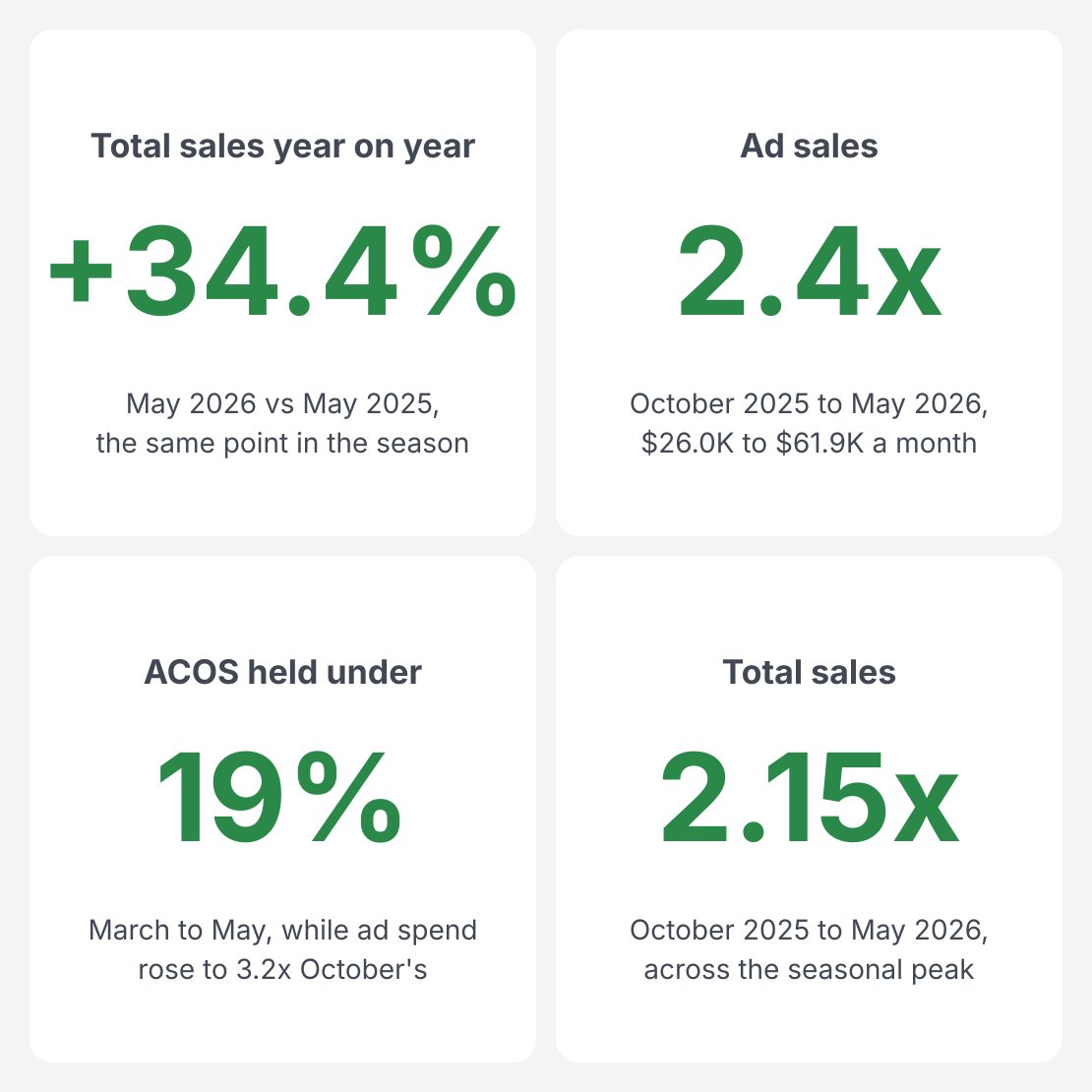
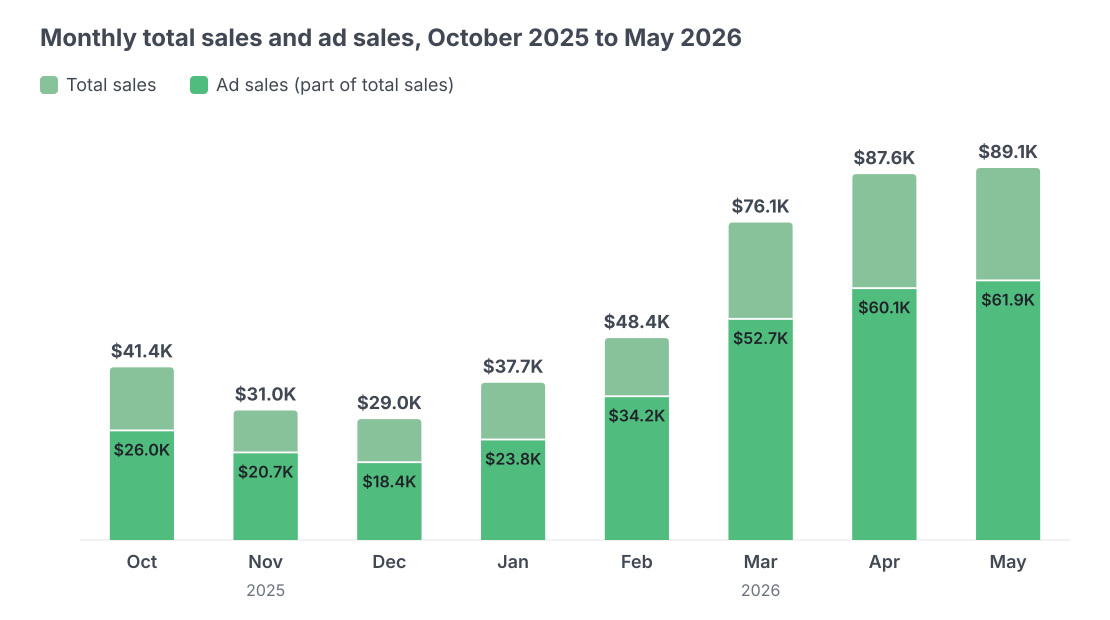
We managed the account's PPC from November 2025 to May 2026, with October 2025 as the baseline. Between October and May total sales grew 2.15x, and much of that was the seasonal peak arriving. The like-for-like figure is May 2026 against May 2025, the same point in the season a year apart: total sales were up 34.4% and units up 27.7%.
The account
| Field | Value |
|---|---|
| Category | Electronics > Car & Vehicle Electronics |
| Starting state | Mixed campaign structure |
Where the account started
The existing campaigns grouped several ASINs and several targeting types together. With everything mixed in the same campaigns, there was no clear control over where the budget went, and no clear view of which products and search terms were driving sales.
The plan: build in the quiet season, scale for the peak
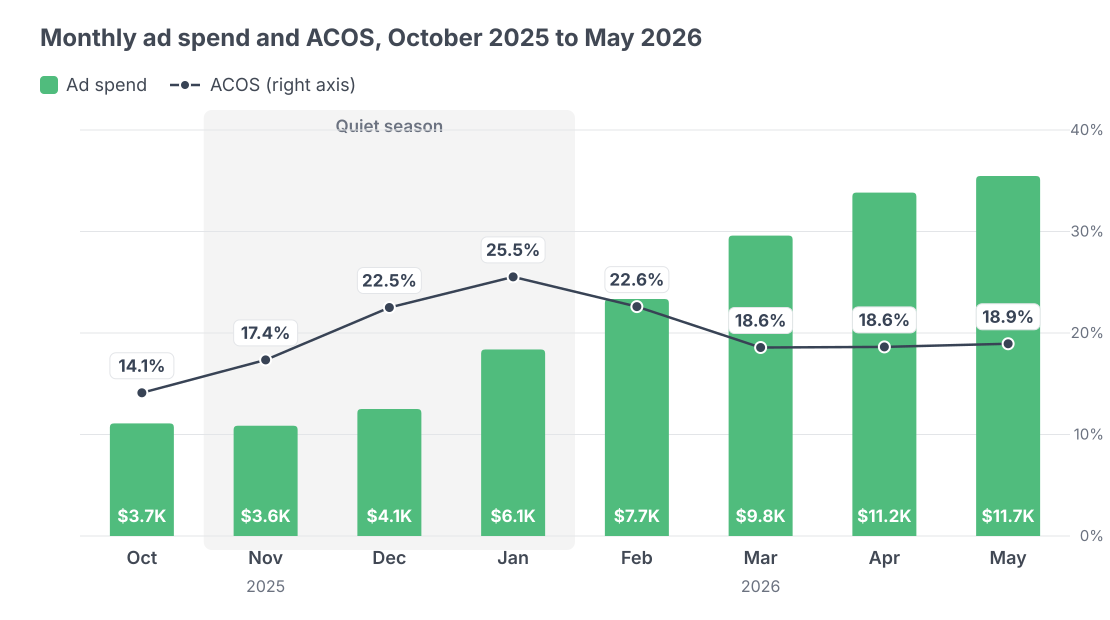
Most sellers cut ad spend when sales slow down. In the quiet season we raised spend from $3.6K to $6.1K a month and accepted ACOS rising to 25.5% in January, because that period was used to build the structure and search term data the peak season would run on. When demand returned, spend nearly doubled again to $11.7K while ACOS fell to 18.6 to 18.9% and held there for March, April and May.
The scaling was deliberate. In March, new exact campaigns were ready but held back because weekly spend was already high, and bid increases in April were 5 to 10% on proven converters only.
What we did, month by month
November: restructure the account
We took over PPC and started restructuring the mixed-ASIN campaigns, beginning with the top-selling ASINs. Products and targeting were separated so each could be managed on its own performance. The Search Term Report showed which search terms were actually converting, and that guided the decisions.
December: cut waste and move good search terms into exact match
We found search terms that were spending money without producing enough sales, added negatives for irrelevant traffic and lowered bids on high-spend, poor-performing targets. Converting search terms moved toward exact match. Campaigns that performed well but were capped by budget got more: one phrase campaign went from $10 to $20 a day, and one broad campaign for a single size variation from $10 to $25 a day.
January: keep improving bids and traffic
We kept adding negatives where search terms were clearly irrelevant, reduced bids on targets that spent without converting, and raised bids where performance supported it. Dayparting was adjusted to each campaign's performance. Spend was watched closely, with no large changes made all at once.
February: build the exact match strategy
We harvested search terms with proven conversions from the auto, broad and phrase campaigns and started building dedicated exact match campaigns, organized by product type and size variation. The auto, broad and phrase campaigns kept running for discovery.
March: control traffic and prepare to scale
We added negatives to the discovery campaigns and protected the exact targeting from overlap, while keeping the negation light enough that useful traffic wasn't cut by accident. Further exact campaigns were prepared, and their launch was held because weekly spend was already high.
April: put more money behind proven winners
Budget moved from weaker campaigns to stronger ones, and selected top performers got higher budgets. Bids went up on proven converting keywords: +10% on selected bids in two exact campaigns, and +5% in a phrase campaign and a mixed-ASIN auto campaign. Bids came down on expensive or inefficient targets, with targeted negatives added. The account depended less on mixed campaigns, which stayed in place for discovery.
May: keep scaling and refining
We kept the focus on the strongest exact match campaigns, adjusting bids and budgets on performance, and kept removing clearly inefficient search terms. Discovery campaigns ran throughout, so new converting search terms kept feeding the exact structure.
The results
| Metric | October 2025 (baseline) | May 2026 | Change |
|---|---|---|---|
| Total sales | $41,364.52 | $89,112.03 | 2.15x |
| Units ordered | 1,770 | 3,736 | 2.1x |
| Ad spend | $3,668.62 | $11,731.50 | 3.2x |
| Ad sales | $25,992.88 | $61,926.34 | 2.4x |
| Ad orders | 765 | 2,085 | 2.7x |
| ACOS | 14.1% | 18.9% |
Sales not attributed to ads grew 77% ($15.4K to $27.2K).
October to May runs from before the quiet season into the peak, so seasonal demand accounts for part of that growth. The like-for-like comparison is May 2026 against May 2025, which removes seasonality: total sales were up 34.4% and units up 27.7%.
ACOS was higher in May than in October, 18.9% against 14.1%. It peaked at 25.5% in January while the structure was being built, then fell and held under 19% from March to May as ad spend passed 3x October's level.
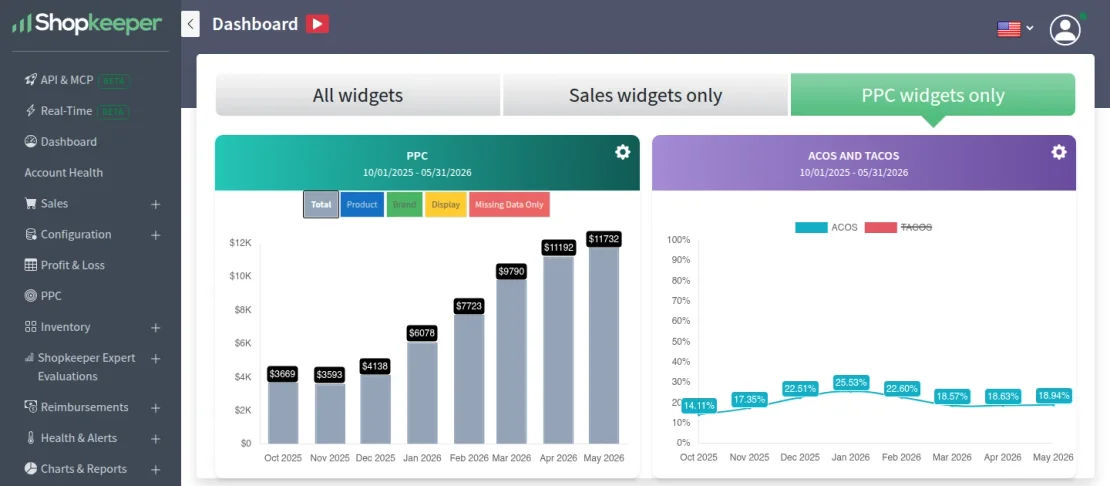
The same eight months in Shopkeeper's PPC dashboard:
Final thoughts
Seasonal demand lifts the whole category. Our job was to capture as much of it as possible, profitably. For this account, that meant using the quiet months to build the campaign structure and search term data, then scaling deliberately into the peak, with spend nearly doubling again by May and ACOS held under 19% from March to May.